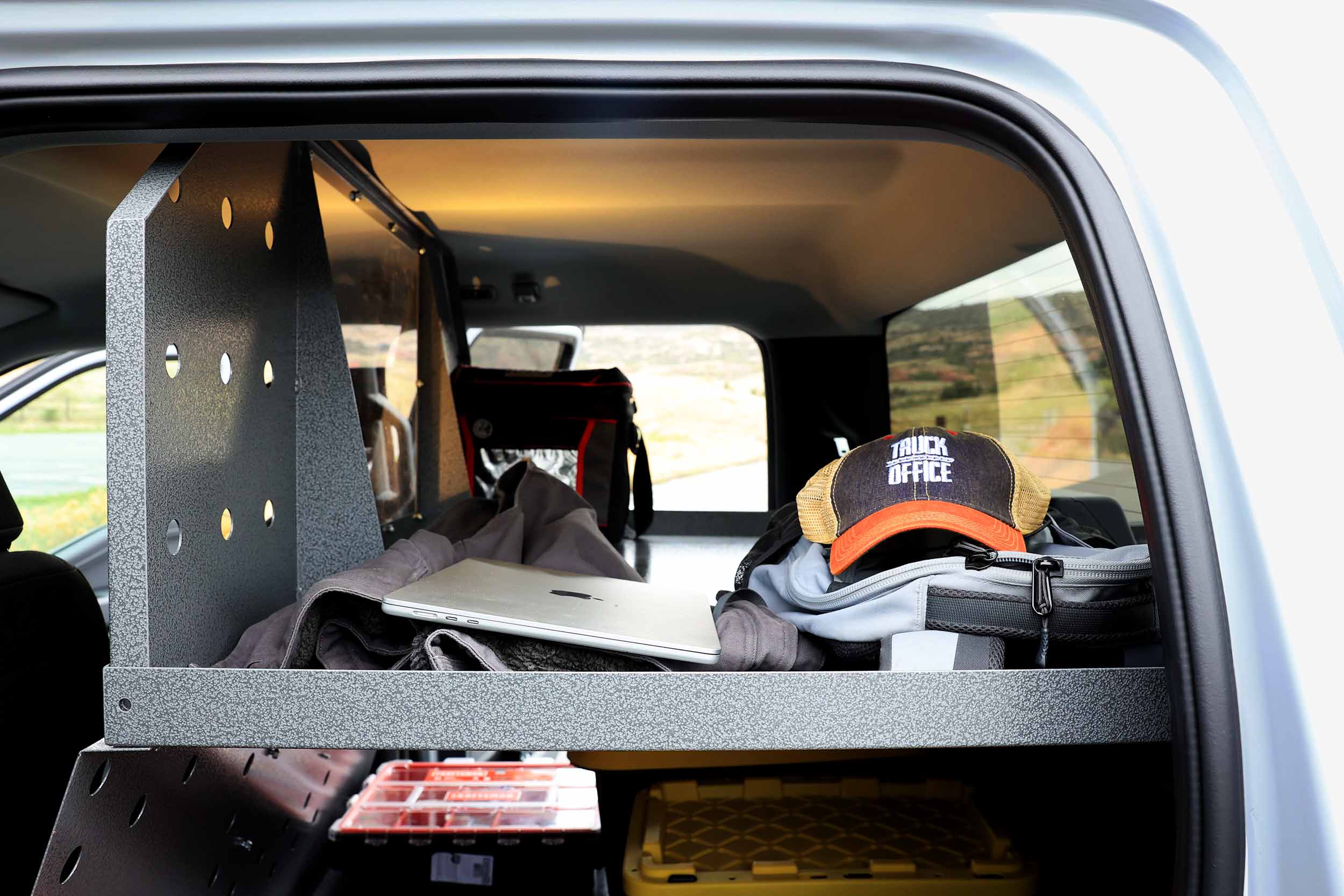
Reducing cab clutter is one of the most practical safety upgrades a fleet manager can make, and one of the easiest to overlook. Loose tools, paperwork, and gear pile up fast in a work truck, especially across power/water utilities, oil and gas, and heavy construction fleets running long field days. This guide walks through where cab clutter comes from, why it matters more than it looks, and how to build a lasting system for keeping every truck in a fleet organized.
What Causes Cab Clutter in Work Trucks?
Cab clutter builds up gradually rather than all at once. A field professional starts the day with a truck bed too full for a specific tool, so it rides in the back seat instead. A laptop or tech manual gets tossed on the seat between stops because there’s no dedicated spot for it. Paperwork accumulates because the glovebox fills up within a week.
Multiply that pattern across a full fleet and a full season, and clutter becomes the default state of most cabs rather than the exception. Trucks without a fixed storage system have nowhere for gear to go except loose on the seat or floor, which means clutter is more of a design gap than a driver habit problem.
Why Cab Clutter Is a Safety and Compliance Issue
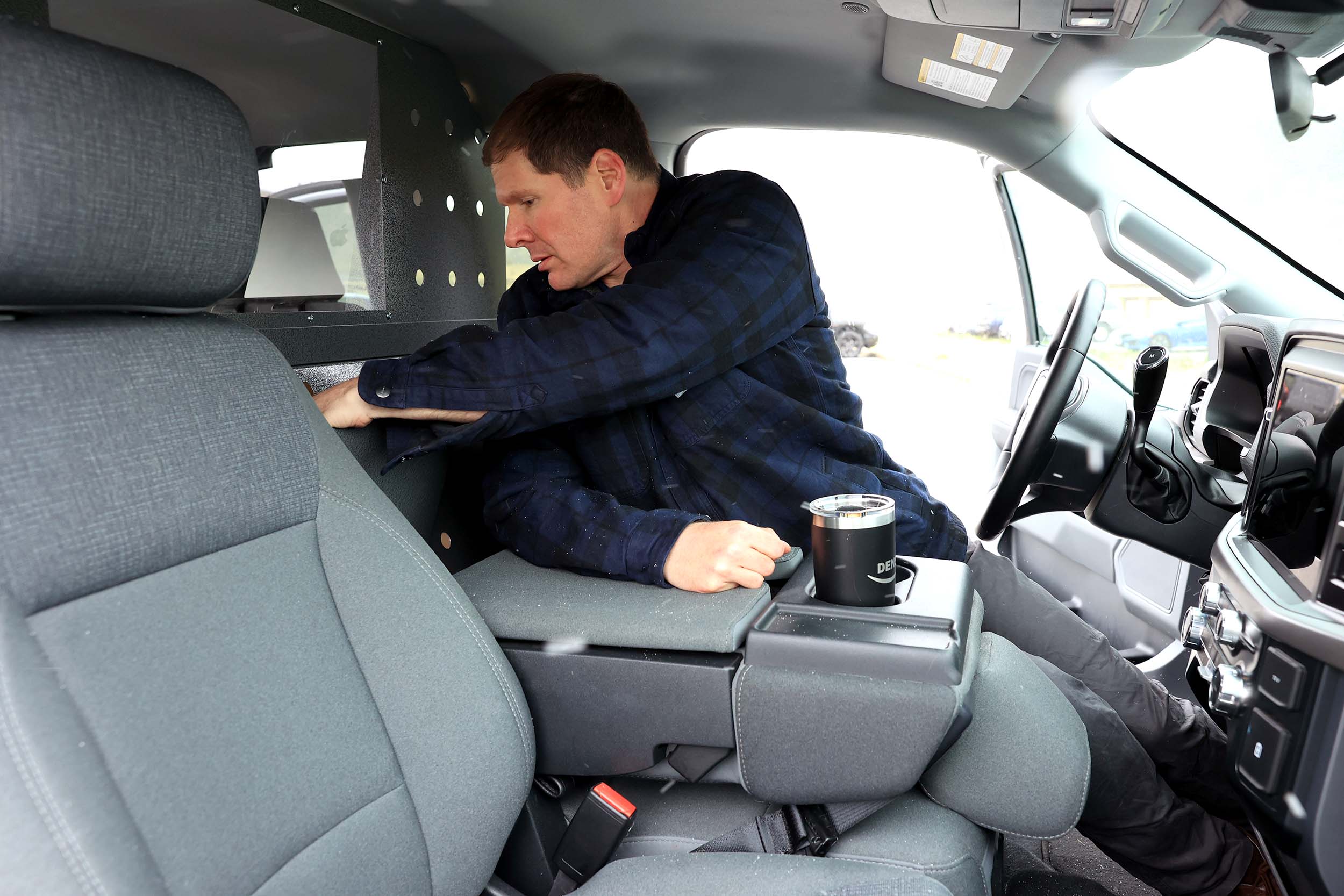
Cab clutter carries consequences that go well past appearance. OSHA Regulation 1926.601(b)(7) and MSHA standards require tools and equipment inside passenger compartments to be secured against movement, and a cab full of loose gear puts a fleet out of step with that standard. During a hard stop or collision, anything riding unsecured becomes a deadly projectile, which turns a cluttered back seat into a direct liability for the driver and the fleet.
Beyond safety, clutter also slows down the workday. Field professionals lose valuable time digging through gear piles to find a specific tool, manual, or cable, and that lost time adds up. That constant disorganization also damages expensive equipment. Loose testing units and diagnostic tools shift and collide during transit, significantly shortening their operational lifespan and driving up replacement costs. Combined, these financial and safety risks make cab organization a critical operational requirement for every work truck.
The Three Categories of Gear Every Fleet Needs to Manage
Most cab clutter falls into three categories, and each one calls for a different kind of storage. Hand tools and equipment make up the first category, covering everything from wrenches and levels to the miscellaneous gear that tends to end up loose on a seat. Testing and diagnostic equipment forms a second category, and this gear typically needs a stable, level surface rather than a soft bin, since vibration and impact damage add up over time.
Paperwork and electronics make up the third category, including logbooks, Bills of Lading, tech manuals, and laptops. This category benefits from enclosed, lockable storage rather than an open tote, since these items carry both a damage risk and a security risk. Mapping a fleet’s actual gear against these three categories, before choosing any storage system, makes it much easier to pick the right configuration for each truck rather than guessing.
Why Bins and Behavioral Reminders Only Go So Far
Plastic totes, seat-back nets, and verbal cab-check reminders address clutter for a day or two before it creeps back. These tools rely on a driver remembering to use them consistently, and they tend to degrade or dislodge under the vibration and temperature swings of daily field work.
Fixed, vehicle-specific storage systems solve the underlying problem instead of managing around it. Setups built from heavy-gauge steel and mounted through a truck’s existing factory attachment points give every tool and document a permanent home, so a clutter-free cab becomes the default state rather than something that depends on daily habits.
How to Get Started Reducing Cab Clutter: A Step-by-Step Implementation Guide
Rolling out a clutter-reduction plan across a fleet works best as a structured process. These four steps move a fleet from assessment to a lasting fix.
Step 1: Walk the Fleet and Document Current Clutter
Inspect a representative sample of vehicles and note what’s riding loose in each one: hand tools, testing equipment, laptops, tech manuals, and paperwork. This walk-through shows which categories of clutter are most common across the fleet and where the biggest risk sits.
Step 2: Sort Gear into Fixed Storage Categories
Group the gear identified in Step 1 into the three categories above: tools and equipment, testing gear, and paperwork/electronics. This sorting makes it clear which trucks need heavy-duty cargo storage, which need a stable equipment surface, and which need lockable console space.
Step 3: Select and Install Vehicle-Specific Storage
Match each truck’s make, model, and year to a storage system engineered for that vehicle’s factory attachment points. Vehicle-specific, no-drill systems install faster than custom fabrication and keep the truck’s structure intact, which matters for both safety and resale value. Coordinating installation through an authorized upfitter keeps every truck in the fleet aligned to the same standard.
Step 4: Build Clutter Standards into Fleet Policy
Add clutter-free cab expectations to the fleet’s pre-trip checklist and ongoing safety documentation once storage is installed. This step keeps the new system working as the long-term standard rather than a one-time fix that fades after a few months.
Common Pitfalls Fleet Managers Should Avoid
Rolling out a fleet-wide storage upgrade takes seamless coordination across vehicles, schedules, and long-term policy. Fleet managers who skip a few key steps often end up with mismatched configurations, disrupted schedules, or a fix that fades within a few months.
Watch for these common missteps:
- Skipping the fleet-wide audit. Ordering storage before walking the fleet often leads to the wrong configuration for a given truck, since vehicle age and model variation mean different trucks need different setups.
- Rolling out installation all at once. Scheduling every truck for installation at the same time, without coordinating with an upfitter’s availability, can create more vehicle downtime than necessary.
- Treating storage as a one-time purchase. Cab organization holds up long-term when it’s built into ongoing fleet policy, with regular reviews as trucks join or rotate out of the fleet.
- Skipping documentation. A maintained checklist keeps clutter from creeping back into trucks that got skipped during the original rollout or added to the fleet later.
A Clutter-Free Cab Is a Safer, More Productive Cab
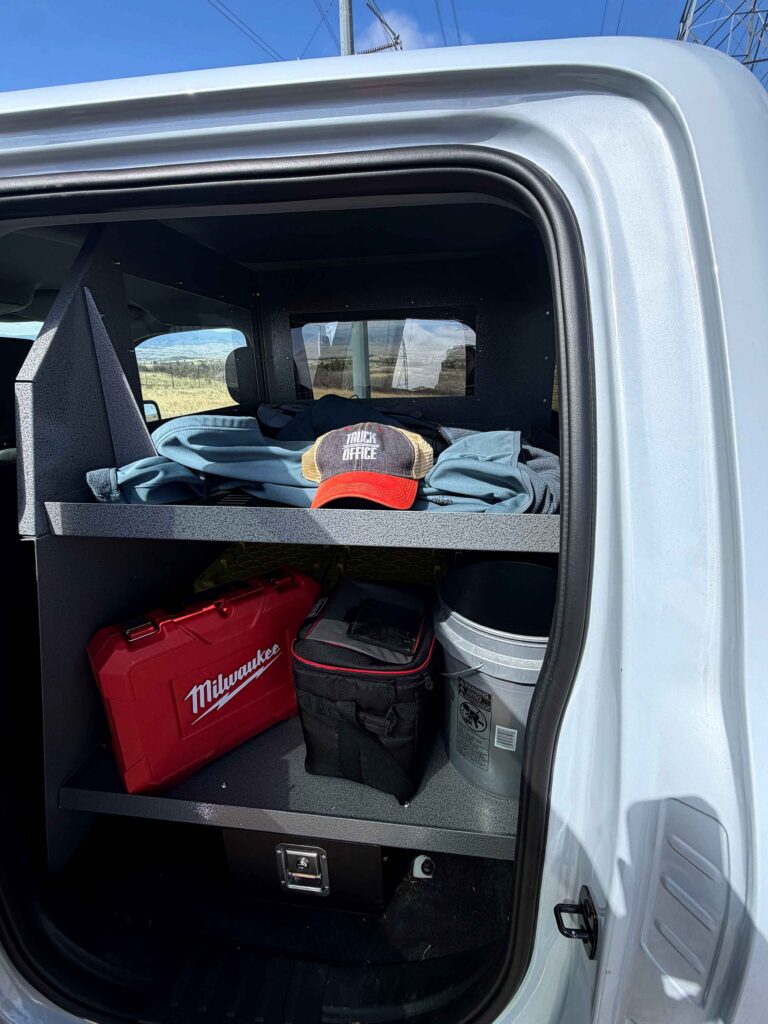
Reducing cab clutter comes down to giving every category of gear a fixed, secure place to live inside the truck. Fleets that audit their trucks, sort gear by category, and install vehicle-specific storage build a standard that holds up far longer than bins and behavioral reminders ever could. Fleet managers ready to move forward can connect with an authorized TruckOffice dealer to find the right configuration for their vehicles and their crews.